Tag Archives: Restaurant

Churrasqueria Grill Tierra de Fuego

2 Ene

Tierra de Fuego
Carne de primera en Tierra de Fuego

CARNE BOLIVIANA DE PRIMERA
Los comensales pueden servirse churrasco de lomito o de cuadril, punta de S, bife chorizo nacional o argentino, tira de res, milanesa de peceto argentino, carne de cerdo, además de surubí y salmón.CON QUE LO ACOMPAÑO
El restaurante tiene más de 30 variedades de vino, de siete bodegas principalmente nacionales, argentinas, chilenas, francesas y portuguesas. Además ofrece refrescos y cocteles. De 17:00 a 20:00, 2×1.DE MARTES A DOMINGO
El local está inspirado en restaurantes especializados en carne en Colombia. Los mejores cortes son preparados a la parrilla y sazonados con sal y sin ablandadores. Atención de mar. a sáb. de 17:00 a 00:00 y dom. de 12:00 a 15:00.
Ubicación: Calle Lemoine # 220. Teléfono: 337-8900.

Para los que todavía no les queda claro dónde está Tierra de Fuego y sus horarios podrán verlo en esta publicación o en el área de INFORMACIÓN de la página Facebook. los esperamos!
Dirección: Calle Lemoine #210 – Entre Colón y Velasco
Teléfono: 337-8900

Bebas – Bolivian Cuisine in LA!

1 Ene

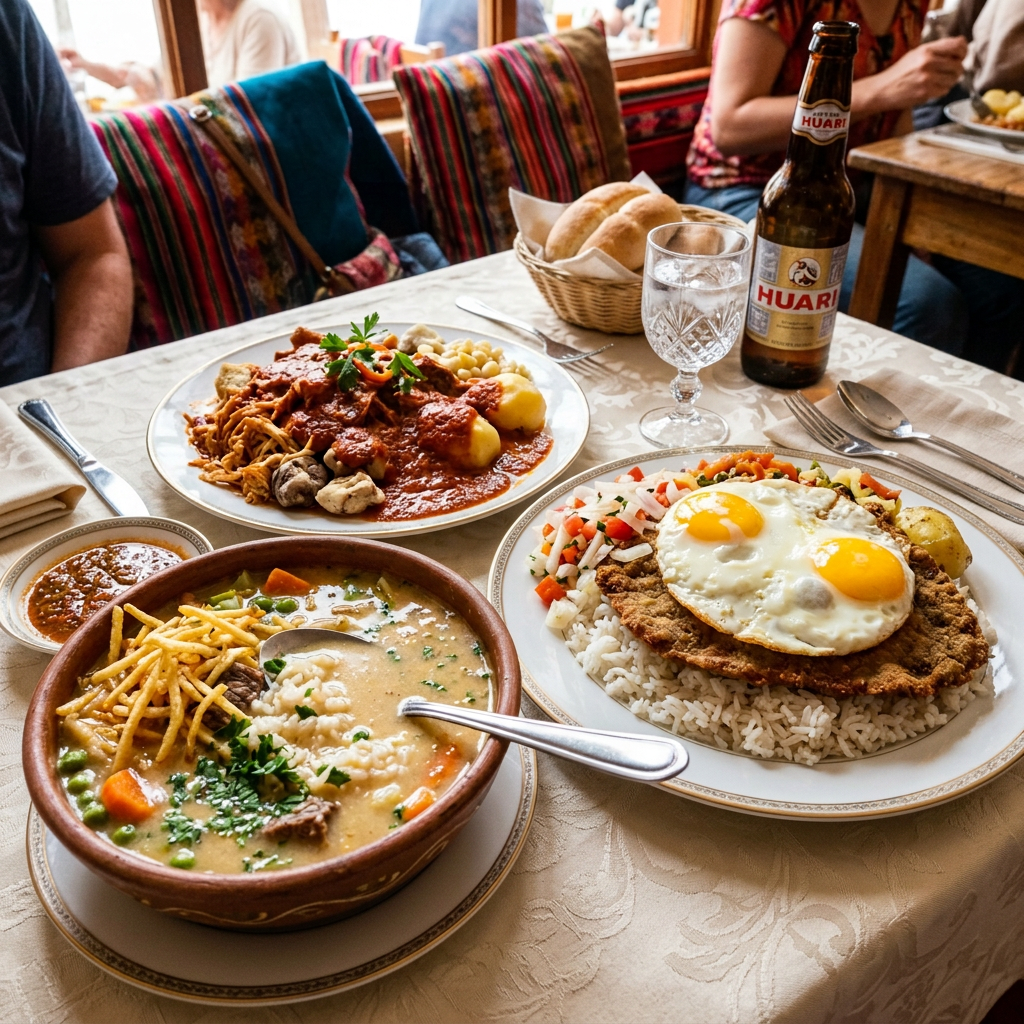
Imagen actual: Three plates of traditional Peruvian meals with rice, eggs, meat, and sauce alongside a glass of water and a beer bottle

Bolivian food in LA? You must be kidding me, right? You mean, I don’t have to fly to VA anymore to get some good Bolivian food?! OMG OMG OMG OMG. I had to go and see for myself. I took my mom and two brothers and we headed out to Beba’s in North Hollywood. I’ve made many treks like this in the past only to find an empty or a burnt down restaurant, or a restaurant that never exist. When we got to Hazeltine Ave., we almost gave up driving up and down that street until finally, we spotted it. A small hole in the wall. So small you’d miss it if you blinked.

Once inside, we noticed that the owners were Bolivian. They even played traditional Bolivian music videos on their television. It’s a must see so ask for it to be played if it’s not on. Also, do not laugh out loud. It may seem funny to non-Bolivians but Bolivians take their songs and culture seriously and who cares if they filmed it on an abandoned train or if the singers are wearing gangsterlike sunglasses reminiscent of Gangsta’s Paradise. This is all part of the experience so sit back and enjoy. All the food on the menu is guaranteed authentic.

Sopa de Mani

We started off with a bowl of peanut soup (Sopa de Mani), my all-time favorite soup in Bolivia. It’s nutty, chicken-y, and full of… fries? Yup. They basically put fries in the soup and it’s actually pretty tasty. Come to think of it, Bolivians put fries in lots of things. I would have liked more chunks in the soup but the broth itself was pretty good. You have to share this because it’s on the heavier side and you don’t want to fill yourself up before you try any of their pastries and entrees.

Empanada de Queso
The Empanada de Queso (cheese empanadas) was a little different from the ones from Santa Cruz. The ones I grew up eating with light and fried, sprinkled with powdered sugar. But, in La Paz, I know they have different types of pastries. This restaurant is definitely Pacena (people from La Paz) so the regional difference exists, and I will have to get used to it. It was good, but a bit on the dry side.
Saltena

This was the highlight of the night. The Saltena is one of the hardest dishes to make. It’s not just an empanada, as most people think. It’s juicy goodness of beef, chicken, potatoes, eggs, raisins, vegetables, olives that is enclosed in a tasty sweet crust. Most people eat it vertically, sucking the juice as they bite down to the bottom. Since we were in a restaurant, we acted civilized and cut it open with our fork. It’s much more fun to eat it from your hands though. This way, you’re sure to get all the juice. They have chicken and beef saltenas. I love both but people definitely have preferences so try both to see which one you like. They taste very different from each other.

Silpancho

The Silpancho is a dish that consists of breaded steak with fried eggs on top, french fries, with a side of rice and salad. To me, this is the most boring dish because you can make this anywhere and it’s not particularly exclusive to Bolivia but if you talk to any Bolivian, this is almost always one of their favorite dishes. Perhaps because it is so easy to make at home, or because people just eat it frequently but it’s definitely a hit. It’s also really hard to mess up so it’s consistently good.

Plato Mixto

We shared the Picante Mixto, which comes with chicken with yellow sauce (picante de pollo), tongue with red sauce (Aji de Lengua), dehydrated potatoes (chuno), rice, and potatoes. My favorite two dishes – picante de pollo and aji de lengua – in one dish is awesome! Most people need some time to get used to the chuno but once you love it, you crave it. It’s just bland potatoes that I used to think were potato salad but it’s just dehydrated potatoes. Bolivia has over 200 different types of potatoes and this is one form of it. The beef tongue was tender and the chicken was amazing. I highly recommend getting this dish.

Don’t forget to order the mocochinchi, a dehydrated peach drink that is my all-time favorite. You just can’t get that anywhere else. I loved the saltenas so much I bought ten – five beef and five chicken, to take home. They have frozen ones you can take home that you can bake in the oven at 450 degrees for 15 minutes. Since they do it in a clay oven you won’t get the nice burnt crust but it will still taste heavenly.


Bebas Restaurant
6024 Hazeltine Ave

Van Nuys, CA 91401

(818) 786-1511

Claus Meyer abre Restaurante

5 Dic

El chef danés Claus Meyer, copropietario del restaurante Noma, el mejor del mundo según Restaurant Magazine, dio otro paso para revolucionar la cocina boliviana con la inauguración de un restaurante en La Paz.
Bolivia.com
Cchef danés Claus Meyer
El restaurante se llama Gustu y en él trabajan 24 jóvenes chefs bolivianos formados en la escuela que Meyer fundó hace más de un año en La Paz, dirigidos por los gastrónomos Kamila Seidler, de Dinamarca, y Michelangelo Cestari, de Venezuela.
Gustu y la escuela, a la que asisten jóvenes de escasos recursos, son parte del proyecto que Meyer impulsa en Bolivia a través de su fundación, Melting Pot, en alianza con la organización no gubernamental danesa IBIS y la alcaldía de La Paz.
Meyer se mostró complacido por la apertura del restaurante, algo que, según confesó a Efe, «no ha sido el proyecto más fácil» que ha emprendido en su vida.
«Es fantástico haber llegado a este punto porque hablamos con mucha gente en los últimos dos años y medio y muchos nos han dicho ‘bien, linda idea, pero ¿te volveremos a ver en algún momento?’. Y yo soy un hombre al que le gusta mantener sus promesas incluso si algunas de las cosas a las que apuntamos son difíciles», dijo.
Con este proyecto, gestado en 2010, el danés pretende generar un movimiento para revolucionar la cocina boliviana y a que los jóvenes que se forman en la escuela sean emprendedores culinarios.
Por ello, aseguró que todo el proyecto apunta a transmitir a los jóvenes bolivianos «esperanzas de un futuro mejor y más prospero».
«El proyecto se trata de educación, de crear una nueva filosofía para que usen sus propios productos y estén orgullosos de quienes son y de dónde vienen», sostuvo Meyer.
Agregó que Gustu debe convertirse en una «fuente de inspiración» para otros chefs en Bolivia, pero además debe captar la atención de amantes de la gastronomía, turistas y periodistas de todo el mundo para que visiten y «disfruten toda la belleza y los elementos maravillosos de este país».
Con este propósito, Meyer eligió a Seidler y Cestari para que formen a los estudiantes en la escuela y dirijan el restaurante.
El programa de entrenamiento que los chefs crearon para los jóvenes bolivianos incluyó prácticas en los dos últimos meses en los restaurantes limeños Acurio’s, Central y Malabar, según explicó Cestari a Efe.
El venezolano señaló que tenían expectativas bajas cuando llegaron a La Paz, pero quedaron gratamente sorprendidos por el «increíble» grupo de gente al que hoy lideran.
«La idea no es que Gustu sea manejado por gente extranjera sino que poco a poco le pasemos esto a la gente boliviana. Nuestra meta es estar dos años aquí e impulsarlo, que vuele bien y dejarlo a una persona boliviana», señaló Cestari.
La particularidad de Gustu es que lo único extranjero son los «head-chefs», pues todo lo demás es «cien por cien boliviano», desde los materiales de construcción, hasta los muebles y, por supuesto, los alimentos y bebidas, dijo Seidler a Efe.
«Aquí van a encontrar a Bolivia, básicamente (…) Va a ser una visita intensa, una noche en Gustu es una visita a Bolivia», agregó.
Cada plato cuesta entre siete y 20 dólares en Gustu, pero también hay menús especiales con varios platillos y bebidas con precios entre los 40 y 135 dólares.
Uno de los estudiantes y ahora trabajadores de Gustu, Rolando Irose Velasco (25), aseguró a Efe que esta experiencia le ha «cambiado la vida» y expresó su deseo de que el restaurante, que ofrecerá una «comida vanguardista» llegue a ser uno de los mejores en Bolivia y el mundo.
Meyer explicó por su parte que la comida en Gustu será «una fusión de la esencia y el legado de la cultura de la comida boliviana» con técnicas modernas.
Cangrejos de río, tumbo, palmito, chancaca (una especie de miel de caña) y carne de llama son algunos de los ingredientes tradicionalmente bolivianos que los jóvenes chef actualizarán en sus recetas.
«Hacemos un restaurante, pero también jugamos un rol en un movimiento. Hombro a hombro con agricultores, pescadores, productores de alimentos, cocineros, queremos probar nuestra parte en este proyecto para redefinir la imagen de la cocina boliviana en un mundo moderno», concluyo
.
Agencia de Noticias EFE